
Remote Access Is Not the Cloud: The Most Misunderstood Idea of “Private Cloud”
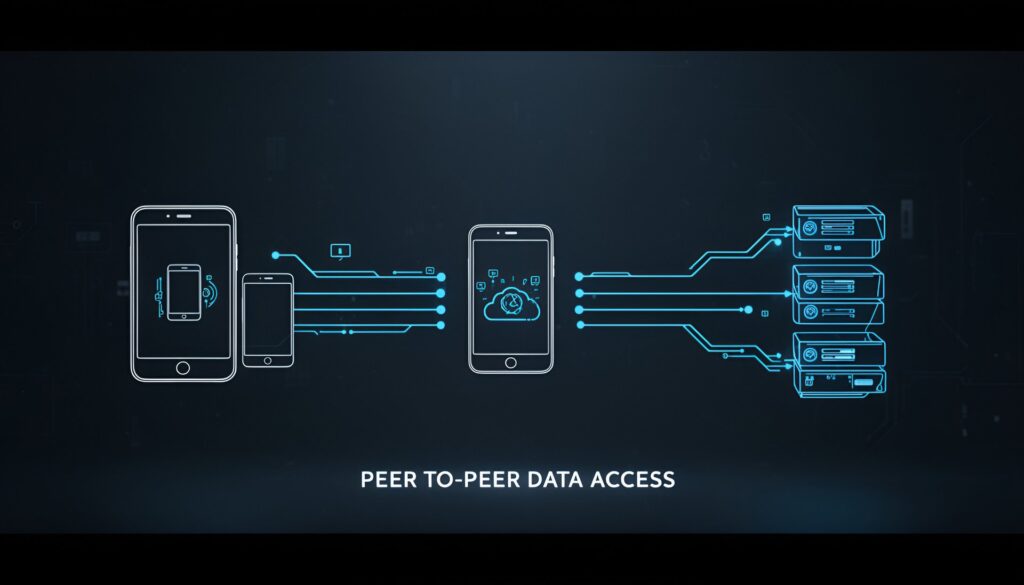
“Remote access” is often treated as a synonym for “the cloud.”
If you can reach your files from anywhere, people assume your data must be in the cloud.
That assumption is wrong—and it is at the core of why “private cloud” is so widely misunderstood.
Remote Access Does Not Equal Cloud Storage
Remote access describes how you reach data.
Cloud storage describes where that data lives and who controls it.
These are fundamentally different questions.
-
You can remotely access a computer in your home while the data never leaves that device.
-
You can also use a cloud drive where every file is uploaded, duplicated, and stored on third-party servers.
The experience may look similar.
The architecture—and the risk profile—is not.
Being able to access data remotely does not automatically mean your data is “in the cloud.”
How the Confusion Was Created
This misunderstanding did not happen by accident.
1. Cloud marketing blurred the definition
Many services promote “access anywhere” as if it were the defining feature of cloud computing, while avoiding a harder question:
Is the data stored and controlled by the provider?
2. Users were forced into a false trade-off
For years, the message was clear:
-
Convenience requires the cloud
-
Privacy requires complexity (NAS, port forwarding, public IPs)
As a result, users began to equate good experience with giving up control.
The Real Value of Peer-to-Peer Access
A true private cloud challenges that assumption.
With peer-to-peer (P2P) access:
-
Data is not uploaded to a cloud server
-
No permanent copies exist outside your devices
-
Remote access is a secure tunnel, not a storage relocation
In this model:
-
Your files stay exactly where you put them
-
You connect directly, device to device
-
No third party can store, scan, or monetize your data
This is not a compromise.
It is a different architecture.
Why Mobilink Chose This Architecture
Mobilink was designed around a single principle:
remote access should never require surrendering data ownership.
That decision shapes the entire system:
-
Peer-to-peer connections by default
-
No cloud storage, no server-side file caching
-
Automatic adaptation to LAN, WAN, and complex network environments
-
End-to-end encryption for all connections
The result:
-
Files feel as accessible as a cloud drive
-
But they never leave your own devices
-
The “cloud” becomes an experience—not a place your data is sent to
Redefining What “Private Cloud” Actually Means
A private cloud is not defined by branding or features.
It is defined by control.
Ask one question:
Does your data remain under your authority at all times?
If files must be uploaded before they can be accessed remotely,
the system is not private—no matter what it claims.
Conclusion
-
Remote access is a capability, not a storage model
-
Cloud storage is about data custody, not convenience
-
Peer-to-peer access removes the false trade-off between usability and privacy
-
A real private cloud keeps data on your devices—always