
How Mobilink Uses a Private Cloud to Solve the Offline Messaging Problem
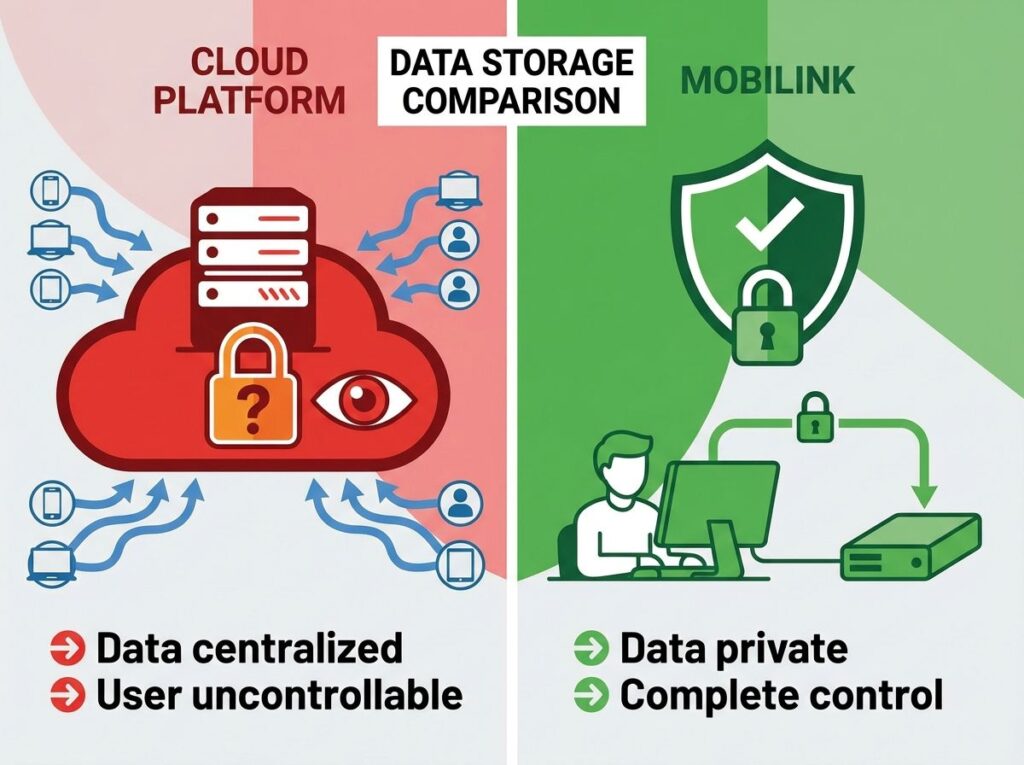
1. A Question Most People Never Ask: Where Do Messages Go When Someone Is Offline?
When you send a message in a typical chat app, you probably don’t think twice about what happens behind the scenes.
But here’s a critical question:
👉 Where does your message go if the recipient is offline?
In most mainstream messaging platforms, the answer is simple:
Your message is stored on the company’s servers
The data flow usually looks like this:
Device → Platform Server → Recipient Device
While this is convenient, it introduces a serious issue:
👉 Your data is always under the control of a third party
2. The Promise — and Limitation — of Decentralized Communication
As privacy concerns grow, more users are exploring:
-
Decentralized communication
-
End-to-end encryption
-
Data sovereignty
This is where P2P (peer-to-peer) communication comes in.
What is P2P messaging?
In simple terms:
Data is transmitted directly from sender to receiver, without passing through a central server
This offers clear advantages:
-
✔ Stronger privacy
-
✔ Reduced surveillance risk
-
✔ No centralized data storage
But there’s a fundamental limitation:
3. The Core Problem: P2P Requires Both Users to Be Online
This is the biggest challenge of decentralized messaging:
👉 If the recipient is offline, the message cannot be delivered
Why?
-
No central server
-
No message relay
-
No storage buffer
As a result:
❌ Messages can’t be sent
❌ Or they simply fail
This is why many “decentralized” apps eventually fall back to using servers for offline messages.
And that brings us back to the same issue:
👉 Your data ends up on someone else’s infrastructure
4. Traditional Solutions (and Their Trade-offs)
There are currently two common approaches:
Option 1: Server-Based Messaging (Mainstream Apps)
Pros:
-
Supports offline messaging
-
Seamless user experience
Cons:
-
❌ Data stored on third-party servers
-
❌ Potential privacy risks
-
❌ Platform-level access to data
Option 2: Pure P2P Messaging
Pros:
-
✔ No server involvement
-
✔ Full data privacy
Cons:
-
❌ No offline messaging
-
❌ Poor usability
👉 Conclusion:
Security and usability are often at odds.
5. Mobilink’s Breakthrough: A Private Cloud Relay Model
Mobilink introduces a fundamentally different approach:
👉 Turn your own device into the “server”
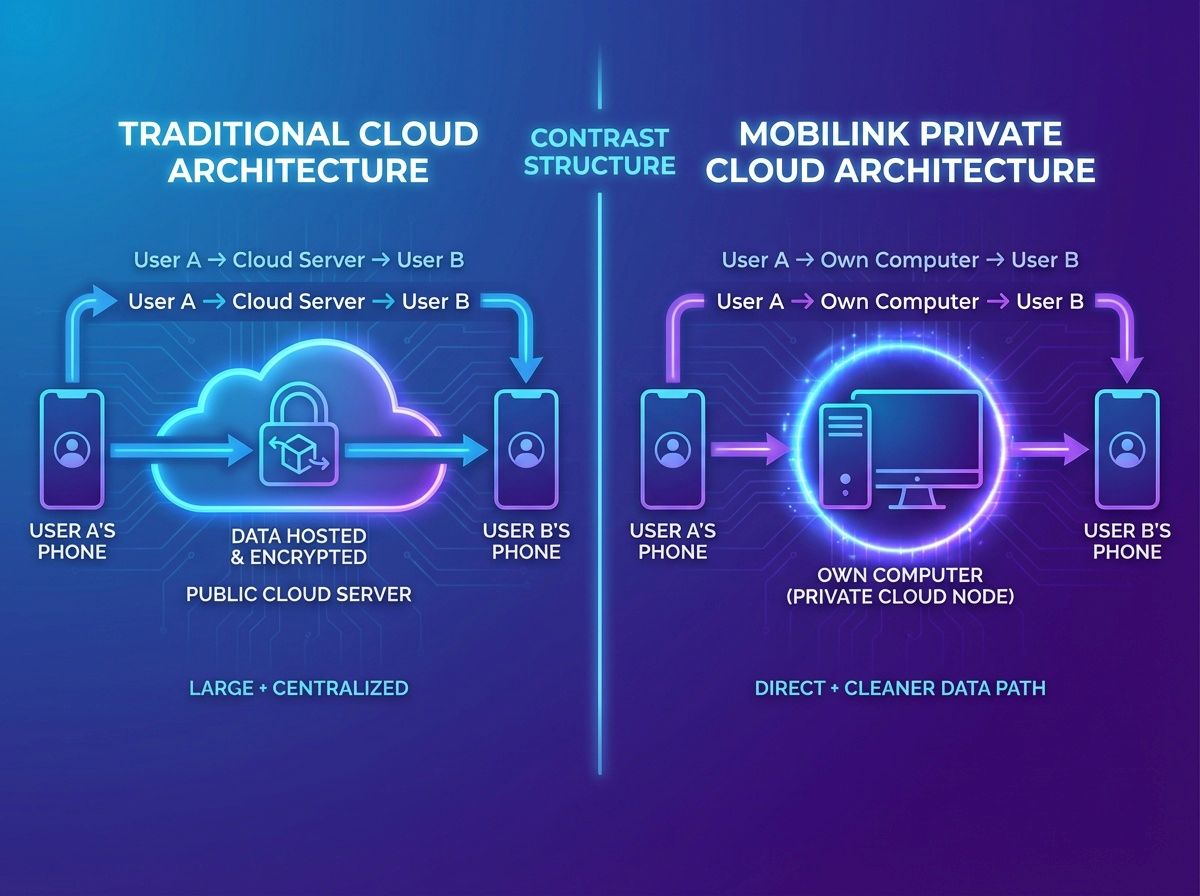
The Core Idea
When the recipient is offline:
-
The message is NOT sent to a central server
-
Instead, it is stored on the sender’s own computer
-
That computer acts as a private cloud node
-
Once the recipient comes online, they retrieve the message directly from the sender
How It Works (Step-by-Step)
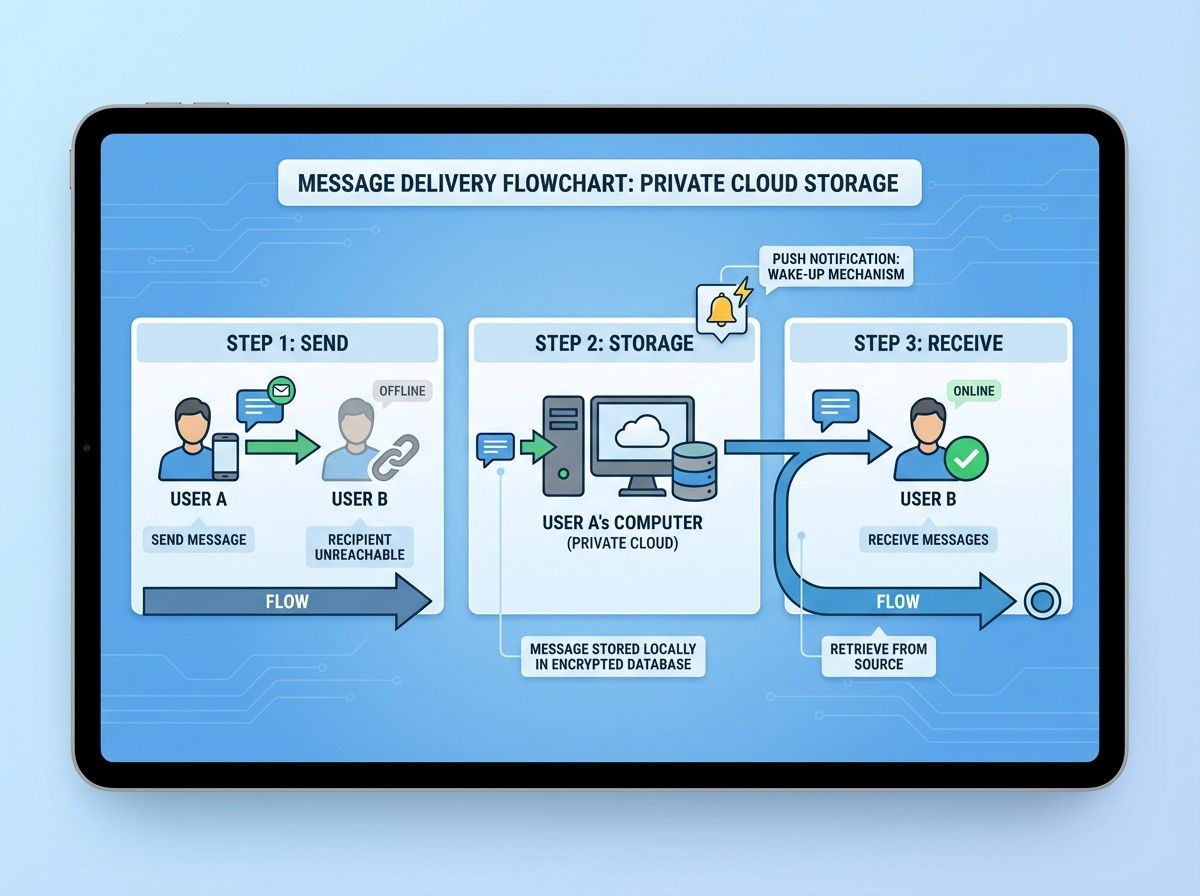
✅ When the recipient is online:
-
Direct P2P transmission
-
Instant delivery
❗ When the recipient is offline:
-
Message → stored in sender’s private cloud
-
Push notification → sent to recipient
-
Recipient reconnects → retrieves message from sender’s device
👉 Key difference:
| Traditional Messaging | Mobilink |
|---|---|
| Stored on company servers | Stored on your own device |
| Controlled by platform | Controlled by user |
| Invisible infrastructure | Fully transparent |
6. Why This Design Is More Secure
Mobilink’s architecture improves security in three critical ways:
1️⃣ No Third-Party Data Storage
Traditional apps:
Data is uploaded to external servers
Mobilink:
Data stays on your own hardware
👉 This drastically reduces exposure risk
2️⃣ Physical Data Control
Where is your data stored?
-
Cloud platforms → Unknown locations
-
Mobilink → Your own computer or storage device
👉 This is the essence of data sovereignty
3️⃣ True Peer-to-Peer Retrieval
Even for offline messages:
-
Data is still transferred peer-to-peer
-
No intermediate decryption or handling
👉 Minimizes the risk of interception or leaks
7. Beyond Messaging: A New Communication Architecture
Mobilink isn’t just improving messaging—it’s redefining how communication systems are built.
Traditional Model:
Central servers are the core
Mobilink Model:
User devices become network nodes
This means:
-
Every user can act as a personal data hub
-
Every computer can function as a private cloud
-
The network shifts from centralized to distributed
8. Who Is This For?
This model is especially valuable for:
✔ Privacy-conscious users
-
Avoid storing messages on third-party platforms
✔ Professionals & businesses
-
Protect sensitive data like contracts and client info
✔ Tech-savvy users
-
Prefer decentralized systems
✔ Users who value control
-
Want full ownership of their data
9. A More Practical Reality
Many assume:
“No servers = bad user experience”
But Mobilink proves:
👉 You can eliminate servers without sacrificing usability
The key is:
✔ Replace servers with private cloud nodes
✔ Replace platforms with user-owned infrastructure
10. Final Thoughts: The Future of Offline Messaging
At its core, offline messaging depends on two things:
-
Where is the data stored?
-
How is the recipient notified?
Mobilink’s answer:
-
Storage → Your own device
-
Notification → Push mechanism
👉 The result:
-
✔ No central server
-
✔ Full offline messaging support
-
✔ Complete data ownership
-
✔ Strong privacy protection